How to fix water rings on a wood table.
Why no single remedy works for every ring: A water mark on a wood table is not one problem—it depends on how deeply moisture or heat penetrated the surface. A white or cloudy ring means vapor is trapped inside the clear finish coat, while a dark gray or black ring means water broke through the finish and chemically stained the wood fibers underneath. Identifying which layer is affected prevents you from turning a minor blemish into a ruined tabletop.
Read the color and texture of the mark first.
Moisture or heat condensed inside shellac, lacquer, or wax, scattering light. The raw wood underneath is not yet stained.
Standing water passed through a worn finish and reacted with natural wood tannins (especially in oak, walnut, and mahogany).
Moisture soaked through veneer seams into glue or composite core, causing physical lifting, ridges, or delamination.
1. White or cloudy rings: moisture and heat inside the finish film
When a sweating cold glass, damp vase, or warm plate leaves a pale, hazy, or milky outline within minutes or hours, the blemish is known in wood finishing as blushing. Older evaporative finishes—particularly shellac and nitrocellulose lacquer—are slightly permeable to water vapor and sensitive to heat.
- What actually happened: Microscopic pockets of moisture became trapped inside the clear coating, changing how light refracts through the film. Because the moisture has not reached the wood fibers, the color of the mark looks white or translucent gray rather than dark brown or black.
- Why restraint matters: Fresh, shallow blush marks sometimes fade on their own over several days as the room dries out. If the finish is intact, gentle professional amalgamating or rubbing techniques can sometimes release trapped vapor—whereas scrubbing with coarse pads or applying steam irons too aggressively can melt shellac, imprint cloth texture into softened lacquer, or blister thin veneer glue underneath.
2. Dark brown or black rings: deep tannin oxidation in the wood
When water sits for days—such as under a leaking plant pot, pet bowl, or damp coaster—and penetrates a scratched or worn-through finish, it soaks directly into the cellular structure of the wood.
- Why the stain turns black: Hardwoods like oak, walnut, mahogany, and cherry contain natural extractives called tannins. When water mobilizes those tannins (and especially when trace iron from water, soil, or metal containers reacts with them), it forms dark iron-tannate complexes inside the wood pores.
- Why surface tricks fail on black rings: Because the chemical reaction is locked inside the raw wood fibers beneath the finish, wiping oils or polishes over the topcoat cannot remove a black ring. Removing deep tannin stains requires stripping the entire tabletop down to bare wood, treating the oxidized fibers appropriately so the surrounding tone remains even, and applying a fresh multi-coat finish system through professional wood refinishing.
3. Why internet remedies and spot-sanding often worsen the damage
Many viral household tips promise instant water-ring removal, but they carry real risks for solid wood and vintage veneer tables:
- Mayonnaise, olive oil, and petroleum jelly: Non-drying food oils and petroleum greases temporarily darken a white ring by filling microscopic fissures in the finish. However, if the finish has hairline cracks, those oils seep into the raw wood fibers, go rancid or attract dust, and create severe adhesion failure ("fish-eye" craters) when a restorer later tries to stain or seal the table.
- Silicone spray polishes: Household sprays containing silicone contaminate wood pores so stubbornly that even chemical stripping can struggle to remove them completely.
- Aggressive spot-sanding: Sanding just one ring in the middle of a tabletop removes the aged patina and stain in a bright halo that is nearly impossible to blend invisibly with the rest of the top. Worse, many vintage dining and console tables have a decorative hardwood veneer top only 1/28" to 1/16" thick—sanding hard on one spot quickly burns straight through the veneer into the core underneath. (If you are unsure whether your tabletop is solid lumber or veneer, check our guide to telling real wood furniture.)
- Harsh household bleach or cleaners: Chlorine bleach breaks down wood lignin, destroys natural grain warmth, and leaves chalky yellow spots that reject wood stain.
4. When to leave the table alone and request a photo review
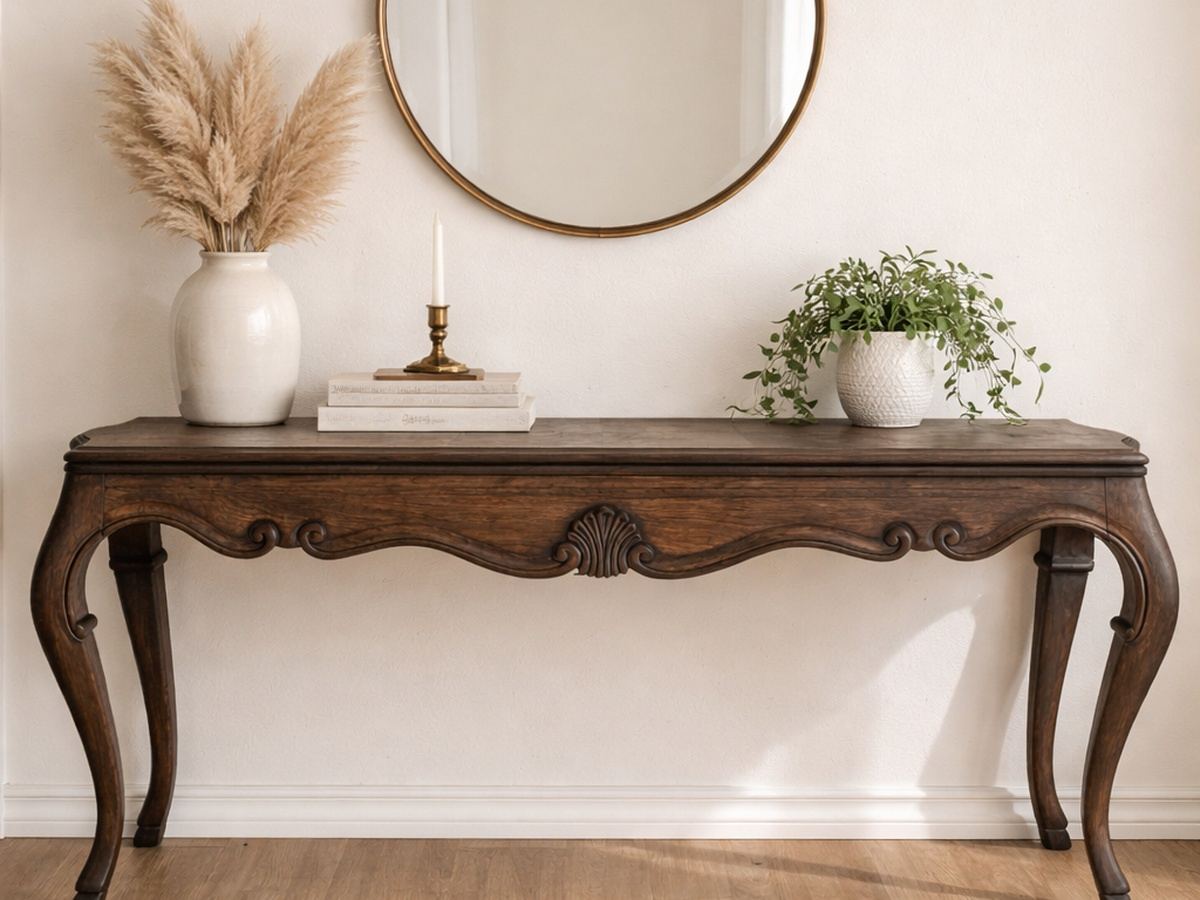
If your table has a single faint white haze on a durable modern finish, letting it dry thoroughly in normal indoor humidity is the safest first step. However, a full top strip and studio refinishing—like the process shown in our carved oak console table case study—is usually the right path when:
- The water ring has turned dark gray or black inside the wood grain.
- The clear finish across the tabletop is sticky, flaking, crazed, or worn bare along the edges.
- Multiple white heat marks and water rings cover the dining or coffee table surface.
- The surface feels rough, raised, or slightly lifted along a veneer seam (see common furniture fixes for how we evaluate veneer and surface prep).